
The staff of the Kentucky Coal Association wishes each and every one of you a happy holiday season filled with love, laughter, and family. Happy Thanksgiving!

“The Sierra Club lives in some weird Orwellian world where up is down and left is right, where “reality” is whatever they decide it to be. Fortunately, most people don’t live in that world. We live in a world bounded by objective reality — a world where people need reliable energy, not fairy dust and pixie sprinkles. And we don’t appreciate blatant lies.”
https://www.realclearenergy.org/articles/2023/09/20/lies_damn_lies_and_the_sierra_club_980859.html

LEXINGTON, KY (July 28, 2023) — It’s hot today – around 95 degrees — and it’s supposed to be hot again tomorrow. But 95 degrees in late-July isn’t really strange for Kentucky. In fact, the average high temperature for this time of year is about 90 degrees.
What is new is the increasing inability of our electric grid to provide the reliable energy we need to meet the high demand in mid-summer. What is new is the regular warnings from utilities that we may see rolling blackouts, brownouts or even grid failure at the very time dependable electricity is needed most. To put it context, in 2020, there were fewer than two dozen major power disruptions across the country. In 2020, there were more than 180 such disruptions. This correlates perfectly to the move away from coal to renewable electric generation.
Yesterday, both MISO and PJM Interconnections issued warnings that generation capacity was reaching its limits and there was a potential for failure. And earlier this year, the same shortages and warnings being seen now were also seen during the mid-winter cold snap. In both cases, the failures of the grid to produce the electricity needed threatened lives — particularly the most vulnerable, the poor, the old, the sick and the young.
These closures didn’t have to happen. They were the result, not of shifts in the market, but of political decisions made by first the Obama and now the Biden Administrations, who are in thrall to their allies in leftist and environmental groups.
We at KCA have warned against shutting down our baseload electric generation capacity – our coal fleet – that served us so well, so dependably for 100 years. Others have joined our warning, including PJM, MISO, the North American Electric Reliability Corp. (NERC) and the National Rural Electric Cooperative Association.
NRECA CEO Jim Matheson put it very bluntly, saying the problems being seen are a “dire warning that America’s ability to keep the lights on has been jeopardized. That’s unacceptable. The decisions we make today determine whether utilities across the nation have the resources to power the American economy tomorrow. Federal policies must recognize the compromised reliability reality facing the nation before it’s too late.
For more information contact Tucker Davis at the Kentucky Coal Association at (859)233-4743 or via email at tdavis@kentuckycoal.com.

By James Lynch
Daily Caller
A conservative watchdog organization is sounding the alarm over a top EPA official’s relationship with Georgetown University Law Center, which has sought to influence EPA policy on multiple occasions, documents show.
EPA Deputy General Counsel for Nationwide Resource Protection Susannah Weaver was given approval by the agency to sit on the GULC board of visitors, as long as she does not identify herself with the agency and abides by ethical standards, according to an Aug. 2021 memo provided to the Daily Caller by Protect the Public’s Trust (PPT), a conservative watchdog group.
PPT filed a Freedom of Information Act (FOIA) request in order to obtain internal documents from the EPA.
“This authorization is really one that makes people shake their heads. It would be one thing if this were an official who was raising money for her daughter’s Girl Scout troop. But Ms. Weaver is on the board and able to fundraise for an organization whose activism frequently involves issues EPA is dealing with, at times by engaging directly with the agency – as FOIA records we have obtained show,” PPT Director Michael Chamberlain told the Caller. He previously served in the Education Department under former President Donald Trump.
“Similar to the decision allowing Christopher Frey, the agency’s top science official, to remain associated with a university that is considered to be an arm of the Chinese government while at the EPA, this is one more instance of questionable judgment by [EPA Administrator] Michael Regan, his senior staff, and their apparently pliable ethics officials,” he added. “Certainly, for an administration touting itself as the most ethical in history, this fails to clear the bar.”
By Jason Plautz,
Energy Wire
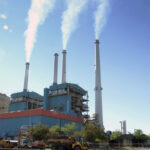
A new rule proposed last month by EPA could spell the end of coal-fired power plants as they currently exist.
But not if some states have their way.
As utilities transition from coal to cleaner-burning natural gas and renewable energy, legislatures in some legacy coal states have stepped into the fray. Utah and Kentucky passed laws this year to make it harder for state regulators to approve utility plans retiring coal plants. In West Virginia, a new law will require the state to sign off before a utility can retire a coal or gas plant. Wyoming has enacted mandates in recent years to push utilities to explore selling coal plants or installing carbon capture technology before shutting them.
Montana, meanwhile, passed a sweeping law that bars climate analyses for new power plants.
Legal experts question whether the states’ efforts will make much of a dent in EPA’s work to clean up the power sector, which accounts for a quarter of the country’s greenhouse gas emissions. But they could set the groundwork for some operators to push forward on novel carbon capture and storage (CCS) technology that may keep power plants open and in compliance with federal regulations. Or they could preview the intense political and legal fights to come.
“A lot of states are making clear that the carbon rule and the other environmental rules are going to wreak havoc,” said Michelle Bloodworth, CEO of the pro-coal trade group America’s Power. “States with a lot of generation are sounding huge alarms and warnings, and that’s why they’re passing legislation and are going to get involved in litigation.”
In Utah, Republican majorities in the state Legislature passed a law known as the Energy Security Amendments — H.B. 425 — this spring to dictate the state’s responsibility to ensure citizens have affordable and reliable power generation. If any power-generating source is forced to retire early because of federal mandates, the law also authorizes the state attorney general to use taxpayer dollars to defend it in court.
The law applies to any energy source, not just coal. But sponsors have tied its goals to the Intermountain Power Project, the state’s largest coal plant, which is set to retire in 2025. Utah state Rep. Ken Ivory (R), the law’s sponsor, told E&E News the goal is to “keep the lights on, keep people safe and healthy and keep the economy moving” in a rapidly changing electricity sector.
EPA’s proposed power plant rule seeks to slash emissions from new and existing coal- and gas-fired power plants, pushing owners to either close them or outfit them with carbon capture technology or clean hydrogen fuel. The requirements change depending on the plant’s use and technology, but the largest plants would have to either close or capture emissions by 2040.
Under the proposal — which could change before it is finalized — states would have to craft compliance plans to be approved by EPA. That’s designed to give states some flexibility to ensure reliability or meet their own regulations. But that doesn’t mean states can rely on their pro-coal leanings to propose plans that wouldn’t slash coal emissions as quickly as the EPA wants, said Stacy Tellinghuisen, deputy director of policy development for Western Resource Advocates.
“At a high level, states can set whatever policies they want, but at the end of the day, they have to comply with the Clean Air Act,” Tellinghuisen said. “Ultimately, the future of a power plant is a conversation between state and federal regulators, utilities, utility commissions, environmentalists and consumer groups to figure out the most cost-effective and reliable solution.”
LEXINGTON, KY (May 11, 2023) — Earlier today, the Biden Administration released a draft package of regulations that will effectively force utilities to close the remainder of the nation’s coal-fired power generation fleet. Today’s action will drive up Americans’ electric bills, push the electric grid past the point of failure, lead to electricity rationing, and bring the nation’s economy to its knees, while China and India continue to grow their economies with low cost coal-fired power generation.
The new rules require coal-fired power plants to capture 90 percent of their CO2 emissions by 2040.
Biden EPA Administrator Michael Regan said utilities can “avoid most requirements by agreeing to shutter their coal units by 2032 or by 2035 if they run them only occasionally. Plants that will retire by 2040 but don’t meet those criteria would co-fire with natural gas, meaning that they would use 40 percent gas to lower their emissions.”
The Biden Administration is taking this action despite warnings from utilities and regulators that closing any more baseload generation capacity will lead to widespread blackouts and total grid failure. Today’s announcement is an open declaration of war against America’s coal miners, their families and the communities across this nation that depend on coal. It will drive tens of thousands of American onto unemployment lines and electric bills beyond many Americans’ capability to pay, forcing millions into energy poverty for millions. It will bring an end to economic development for Kentucky and the other states that depend on coal-fired generation for low industrial electricity rates to attract business investment.
Here in Kentucky, we’ve seen first-hand what the radical policies of the Obama and Biden Administrations have done.
Kentucky Power (KP) stopped coal-fired power generation at its Big Sandy plant in 2015. Since its closure KP customers have seen their electric bills increase by 78 percent – from 9 cents per kWh to 16 cents per kWh today. The shutdown of Big Sandy’s coal generation was largely the result of a decade-long regulatory assault by the Obama-Biden Administration that was designed to force utilities to close coal-fired power plants. Kentuckians were not alone in seeing their bills rise, average electricity prices across the nation increased by almost 30 percent between 2011 and 2021, as coal-fired generation went from 42% to 22%.
As a harbinger of things to come, this past December, Kentucky Utilities instituted rolling power outages as temperatures plummeted due to a polar air mass because they did not have the ability to meet the electricity demand. Yet, Kentucky Utilities and its sister company Louisville Gas & Electric are currently before the Kentucky Public Service Commission requesting approval to close 1,500 MW of coal-fired generation, that’s enough power to service over 600,000 homes.
Just a few weeks ago, PJM, the grid operator for the nation’s largest electricity market, projected it will lose 40 GW of generating capacity by 2030 – 21% of the market’s existing capacity – with only 31 GW of additions in the same period. Of the 40 GW of projected losses, PJM expects 25 GW to be pushed off the grid due EPA rules and state-mandated clean energy targets.
PJM believes that just three EPA rulemakings – part of the suite of six the agency is promulgating – could force 10,500 MW of capacity off the grid. Even the Biden Administration’s own regulators say the pace of coal plant closures is too fast.
FERC Commissioner Mark Christie has said traditional sources of power are shutting down “at an unsafe pace” to keep up with the transition to wind and solar and that “The red lights are flashing everywhere. We’re not going to have sufficient power supply.”
Christie’s fellow FERC Commissioner James Danly said, “We know that there is a looming resource adequacy crisis. Our market operators have been explicitly telling us as much for years. Both MISO and ISO-NE have warned about upcoming scarcity and PJM, the nation’s largest wholesale [electricity] market, and the one that serves Washington, D.C., has recently raised the alarm about impending shortfalls.”
Even the Biden-appointed Chairman of FERC, Willie Phillips, testified: “I am extremely concerned by the pace of retirements we are seeing of generators that are needed for reliability on our system.”
In fact, in 2022, as many as 40 planned coal plant retirements were postponed or scrapped largely due to acute grid reliability challenges where utilities and grid operators have made it clear closing plants would be reckless.
Today’s action by the Biden Administration must not be allowed to move forward. We urge you to call your Congressmen, your Senators, to contact your neighbors and friends and tell them our nation is being threatened by President Biden’s reckless disregard of reality, of the needs of average Americans who depend on reliable, affordable electricity. Urge them to take action to stop these policies from being enacted. The time is short. The threat to our way of life is real.
For more information contact Tucker Davis at the Kentucky Coal Association at (859)233-4743 or via email at tdavis@kentuckycoal.com.
-30-

FRANKFORT, KY (March 16, 2023) – The following is a statement from the Kentucky Coal Association (KCA) regarding the passage of State Senate Bill 4, sponsored by Senator Robby Mills, which will help protect the state’s electric grid from the threat posed by the ill-advised closure of much of the state’s coal-fired electric generation fleet.
“Kentuckians are common sense people. When you find yourself stuck in a hole, the first thing you do is stop digging. It has been obvious for some time that the continued closing of the state’s coal-fired power plants is bad policy and something had to be done to protect the long-term stability of the electric grid. The near failure of the grid to meet demand this past December brought the issue to the fore.
Today, the Kentucky General Assembly took a big step toward guaranteeing Kentuckians can feel confident that when they flip the light switch or turn on their furnace, the electricity they need will be there. The Kentucky House passed Senate Bill 4 on a 66-28 vote. The bill will now go to Governor Beshear for his signature.
We trust the Governor will sign this common-sense bill. Nothing is more important in the modern world than the ready and reliable availability of affordable electricity. It is the lifeblood of industry. Without it, nothing works. No lights, no heat, no television, electric vehicles, computers, none of the comforts of modern life. Kentucky’s ready access to affordable and almost limitless electricity is why so many major manufacturers have chosen the state as home.
However, the continuing closure of power stations across Kentucky and across the country, has robbed our state of the certainty that our coal-fired baseload generating plants provided for so long. Last December, due in large part to these closures, combined with the inability of renewable and natural gas plants to meet demand during the bone-chilling temperatures the state was seeing, threatened to push the grid past the breaking point to failure. The result would have been catastrophic and life-threatening. Today, the House joined the Senate in the passage of SB4, effectively drawing a line in the sand and saying ‘no’ to further cuts without a full accounting of the impact on the economy and human life.”
For more information contact Tucker Davis at the Kentucky Coal Association at (859)233-4743 or via email at tdavis@kentuckycoal.com.

FRANKFORT, KY (March 29, 2023) – The following is a statement from Senator Robby Mills regarding the passage of State Senate Bill 4 without Governor Beshear’s signature. The bill, sponsored by Senator Robby Mills, will help protect the state’s electric grid from the threat posed by the ill-advised closure of much of the state’s coal-fired electric generation fleet.
“For the sake of Kentucky ratepayers and the job-producing coal industry being bludgeoned by federal regulations, I am happy Senate Bill 4 will be state law. While it would have been great for the Governor to stand in solidarity with the legislature and Kentucky residents by placing his signature on Senate Bill 4, we should be grateful that Governor Beshear is currently running for re-election and decided that no action was more politically expedient.”
Senate Bill 4 strengthens electric grid reliability in the Commonwealth and ensures Kentucky’s residents are not faced with the dangerous and sometimes deadly consequences of power outages, “brown-outs,” or “black-outs.” The bill would prohibit the Kentucky Public Service Commission (PSC) from authorizing the retirement of a fossil-fuel-fired electric power generating unit unless the utility can demonstrate that:
- The utility will replace the retired unit with a new electric generating capacity that is dispatchable; maintains or improves the reliability and resilience of the electric transmission grid; and maintains the adequate minimum reserve capacity;
- The retirement of the unit will not harm the utility’s ratepayers by causing the utility to incur costs to be recovered from the ratepayers that could be avoided by continuing to operate the unit.
- The decision to retire the unit is not the result of any financial incentives or benefits offered by any federal agency. Additional bill provisions would require the PSC to submit an annual report by December 1 to the Legislative Research Commission on the retirement of electric generating units.
Senate Bill 4 carries an emergency designation, which means it became effective state law immediately upon filing with the Kentucky Secretary of State’s Office.
Senator Robby Mills, R-Henderson, represents the 4th Senate District, including Henderson, Hopkins, Union, and Webster Counties. He serves as Senate State and Local Government Committee chair and is a Senate Economic Development, Tourism and Labor; Natural Resources; and Energy and Transportation committee member. Additionally, he is a Public Pension Oversight Board member and a member of the Budget Review Subcommittee on General Government, Finance and Public Protection.
For more information contact Tucker Davis at the Kentucky Coal Association at (859)233-4743 or via email at tdavis@kentuckycoal.com.

BY LIAM NIEMEYER Kentucky Lantern
Mar 17, 2023
FRANKFORT — A bill backed by Kentucky’s coal industry that would make it harder for utilities to retire fossil fuel-fired power plants received final passage Thursday in the Kentucky House of Representatives, sending the legislation for Gov. Andy Beshear’s consideration.
Senate Bill 5, primarily sponsored by Sen. Robby Mills, R-Henderson, would impose a series of prerequisites on the Kentucky Public Service Commission, the state regulator of utilities, before the commission could approve a utility’s request to retire a fossil fuel-fired power plant.
The bill sparked strong debate over the role coal-fired power will play in the future of the state, where coal currently generates the large majority of electricity for Kentuckians. Most Republicans touted their support for coal, asserting that past and planned retirements of coal-fired power plants in Kentucky and across the country threaten the reliability of the state’s electric grid.
“When it comes to renewable energy, I have no problem. But the wind won’t always blow and the sun won’t always shine. But coal always keeps the lights on,” said Rep. Ryan Dotson, R-Winchester on the House floor.
Mills, the primary bill sponsor, and other Republicans point to rolling blackouts implemented by some Kentucky utilities due to arctic temperatures as a recent example as to why the legislation is needed. During a legislative hearing earlier this year about the rolling blackouts, utility leaders instead pointed to key components of a natural gas pipeline that froze as a cause behind the rolling blackouts.

By Tucker Davis, president
Kentucky Coal Association
March 15, 2023
Between 2011 and 2022, residential customers of Kentucky Power saw their electric bills increase by 78 percent – from 9 cents per kilowatt hour to 16 cents per kilowatt hour. This increase coincided with the shutdown of the company’s Big Sandy coal-fired power plant and its conversion to natural gas.
Meanwhile, residential customers of LG&E saw their electric bills go up by 33 percent over the same period – from just over 9 cents per kilowatt hour to just over 12 cents per kilowatt hour. And residential customers of Duke Energy saw a 48 percent increase. Lastly, Kentucky saw its national rank among states for the lowest cost of power from 4th to 18th.
The one common factor in the rise of electric bills for Kentuckians is the closure of approximately 6000 MW of coal-fired capacity that has been shut down in Kentucky over the past decade. That is enough power generation capacity to provide electricity to every home in Kentucky for three years.
A few months ago, LG&E and KU announced further closures of coal generation across the state, and coal capacity continues to be retired at breakneck speed across the country. Defenders of the push to close coal capacity claim it will save customers money. But it clearly hasn’t so far, as the skyrocketing price of electricity clearly shows. In fact, more and more Kentucky families are facing energy poverty – forced to choose between food on the table and paying their ever-increasing electric bills.
And it isn’t only the price of electricity that is becoming a problem. Utilities are closing down coal-fired capacity faster than the oft-promised replacements with wind, solar and battery storage are being built and brought online. And yet, the power companies have largely shifted from long-term supply contracts for coal, which can be stored at the power plant until needed, to buying coal at spot prices as needed. This may sound like a good idea, but it prevents the coal companies from producing a regular, dependable amount of coal, which means fewer coal mines operating, few coal miners working and, when the crunch time comes, higher prices for what coal can be produced.
Meanwhile, renewables simply can’t produce as needed. In fact, as shown many times in recent years, they fail and production declines at the very times when the most electricity is needed – such as during the recent bone-chilling cold snap in December, when these same power companies were forced to issue warnings for blackouts, brownouts and shortages, pushing customers to reduce usage just as the need was greatest.
- 1
- 2
- 3
- 4
- Next Page »
